
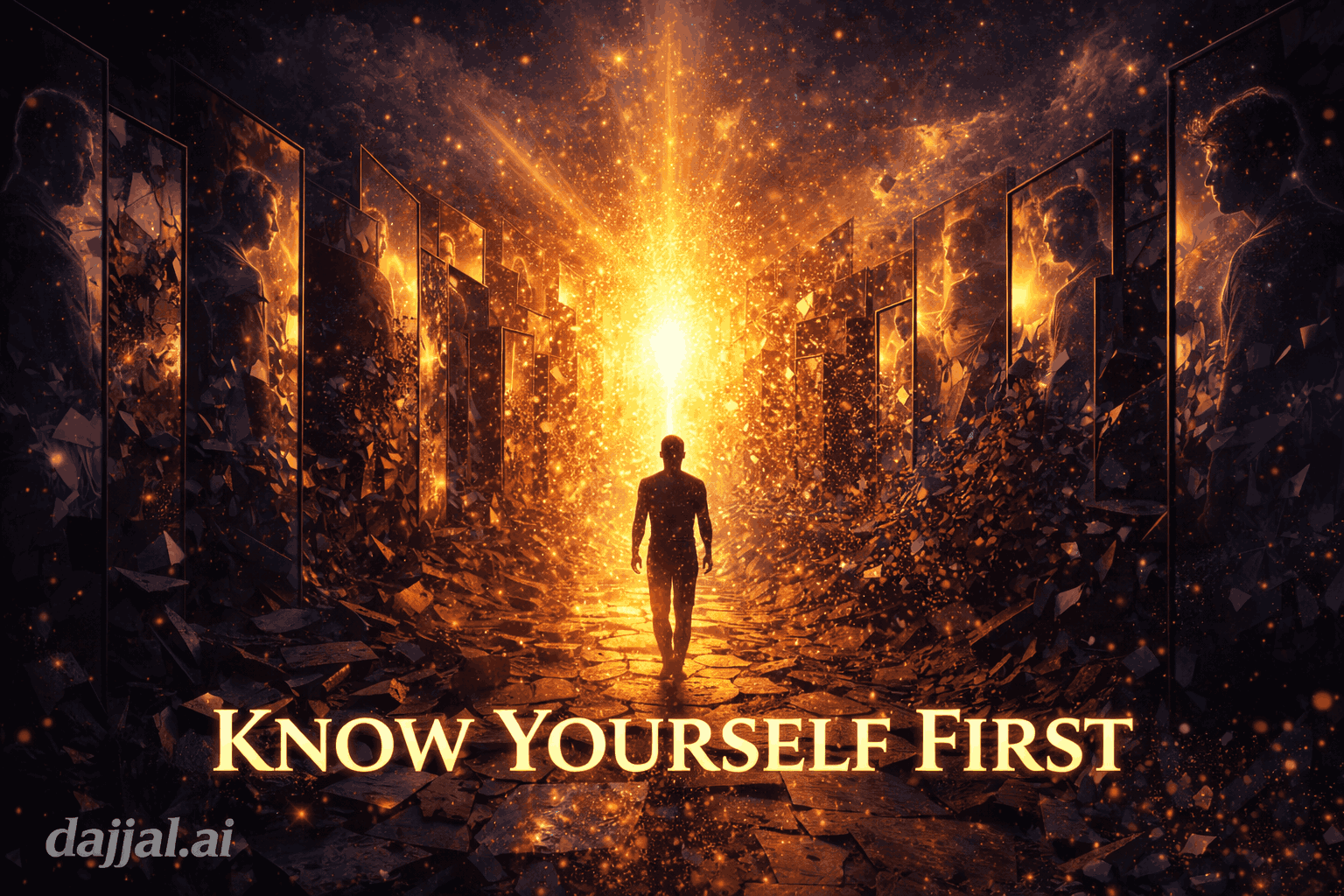
Spirituality is Incomplete Without Self-Knowledge: The Hidden Truth of Inner Insight
The Missing Piece in Spirituality
Many people today are drawn toward spirituality. They meditate, read books, follow teachings, and adopt practices that promise peace and enlightenment.
Yet, despite all these efforts, something often feels… incomplete.
There is still confusion.
Still restlessness.
Still a sense of searching.
Why?
Because spirituality without self-knowledge is like building a house without a foundation.
You can decorate it beautifully, but it will never be stable.
The real journey does not begin outside—it begins within.
If you do not know yourself, your spirituality will always remain incomplete.
What Does It Mean to “Know Yourself”?
Self-knowledge is not about surface-level understanding.
It is not just:
- Knowing your favorite things
- Understanding your personality
- Identifying your strengths
True self-knowledge goes deeper.
It is about:
- Observing your thoughts without attachment
- Recognizing your emotional patterns
- Understanding your fears and desires
- Seeing your unconscious behaviors
It is about asking:
- Why do I react this way?
- What is driving my actions?
- Who am I beyond my mind?
This level of awareness is rare—but it is essential.
The Illusion of Spirituality Without Self-Awareness
Many people unknowingly fall into the trap of “false spirituality.”
They:
- Follow rituals without understanding
- Seek validation through spiritual identity
- Escape reality instead of facing it
This creates a dangerous illusion.
They feel spiritual—but they are not transformed.
Why?
Because they have not looked within.
Without self-awareness:
- Meditation becomes mechanical
- Beliefs become blind
- Practices become empty
True spirituality is not what you do—it is what you realize.
Why Self-Knowledge is the Foundation of Spiritual Growth
1. It Reveals Your Inner Reality
You cannot grow spiritually if you are disconnected from your inner world.
Self-knowledge shows you:
- Your hidden fears
- Your limiting beliefs
- Your emotional wounds
Only when you see clearly can you begin to change.
2. It Breaks the Ego’s Control
The ego thrives on illusion:
- “I am right”
- “I am better”
- “I need approval”
Without self-awareness, the ego controls your life.
But when you observe yourself deeply, you begin to see the ego as a pattern—not your identity.
This realization is the beginning of freedom.
3. It Transforms Pain into Wisdom
Pain is not your enemy.
It is a teacher.
Self-knowledge allows you to:
- Understand your pain
- Learn from it
- Grow beyond it
Without awareness, pain becomes suffering.
With awareness, it becomes transformation.
4. It Aligns You With Truth
Truth is not something you learn—it is something you uncover.
And it is already within you.
Self-knowledge removes illusions, revealing your authentic self.
5. It Brings Inner Clarity and Peace
When you understand yourself, confusion disappears.
You stop:
- Overthinking
- Reacting impulsively
- Seeking external validation
Instead, you become:
- Calm
- Aware
- Centered
The Hidden Truth of Inner Insight
Here is a truth most people never realize:
You are not lost—you are unaware.
Your true self has always been there.
But it is hidden beneath:
- Thoughts
- Emotions
- Conditioning
- Fear
Inner insight is not about gaining something new.
It is about removing what is false.
The Journey of Inner Insight
Stage 1: Discomfort
You begin to feel that something is not right.
Stage 2: Questioning
You start asking deeper questions about life and yourself.
Stage 3: Awareness
You observe your thoughts and behaviors.
Stage 4: Confrontation
You face uncomfortable truths about yourself.
Stage 5: Release
You let go of limiting beliefs and patterns.
Stage 6: Clarity
You begin to see yourself and life more clearly.
Stage 7: Transformation
Your perception, behavior, and identity shift.
Practical Ways to Develop Self-Knowledge
1. Practice Mindful Observation
Watch your thoughts without judgment.
2. Journal Daily
Write honestly about your feelings and experiences.
3. Spend Time Alone
Solitude helps you connect with your inner world.
4. Question Your Reactions
Ask:
- Why did I react this way?
5. Embrace Silence
Silence reveals deeper truths.
6. Accept Yourself Fully
Self-knowledge requires acceptance—not resistance.
Common Mistakes in the Spiritual Path
Avoiding Inner Work
Many people focus on external practices instead of inner understanding.
Seeking Quick Enlightenment
True transformation takes time.
Comparing Your Journey
Your path is unique.
Ignoring Emotional Healing
Unresolved emotions block growth.
The Turning Point: When Everything Changes
At some point, something shifts.
You stop searching outside.
You start looking within.
And suddenly, things become clear.
You realize:
- You are not your thoughts
- You are not your past
- You are not your fears
You are something deeper.
Something still.
Something aware.
Conclusion: The Truth You Cannot Ignore
Spirituality without self-knowledge is incomplete.
It may give temporary comfort, but it cannot bring true transformation.
Self-knowledge is the key.
It is the beginning of:
- Awareness
- Clarity
- Peace
- Awakening
If you truly want to grow spiritually, start with yourself.
Not tomorrow.
Not later.
Now.
Because the moment you begin to understand yourself—
your spiritual journey truly begins.

Leave a Reply