
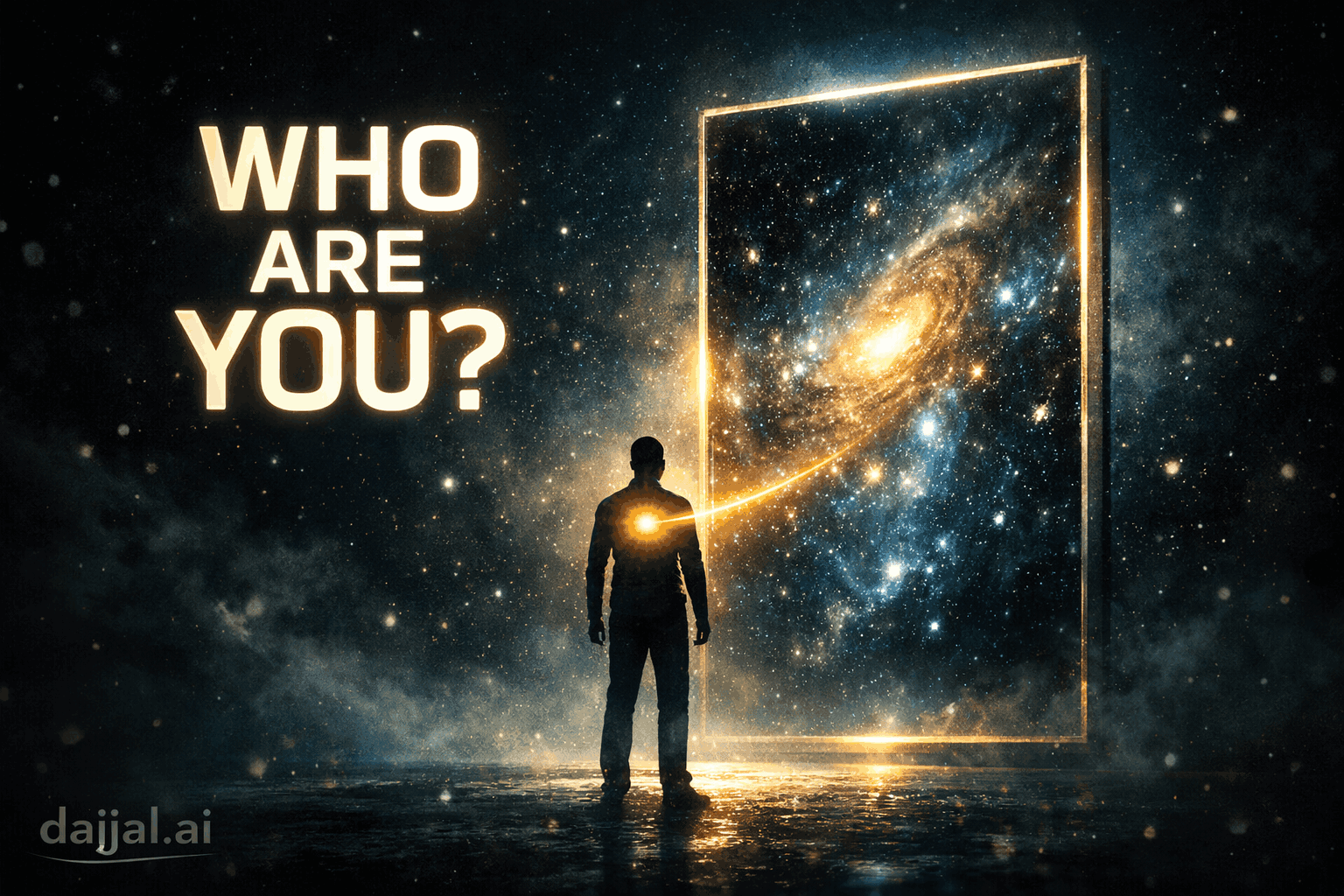
Who Are You? The Question That Starts Spiritual Journey
A Question That Changes Everything
At some point in life, a simple yet powerful question arises within us:
“Who am I?”
It may appear ordinary, even obvious. You might answer with your name, your profession, your relationships, or your achievements. But deep inside, something feels incomplete—as if none of these truly define you.
This question is not just philosophical. It is the doorway to your spiritual journey.
Every great transformation begins with awareness, and awareness begins with questioning. When you genuinely ask yourself “Who am I?”, you begin to peel away layers of illusion and conditioning that have shaped your identity.
This article will guide you step-by-step through understanding this question, exploring your inner self, and beginning a journey that leads to clarity, peace, and purpose.
Why “Who Are You?” Is More Than Just a Question
Most people live their entire lives without ever deeply questioning who they are. They follow routines, chase goals, and define themselves based on external factors.
But here’s the truth:
You are not just your name.
You are not just your job.
You are not just your past.
These are roles—not your essence.
The question “Who are you?” challenges everything you believe about yourself. It disrupts your comfort zone and invites you to look deeper.
And that’s where the transformation begins.
The Layers of Identity
To understand who you truly are, you must first understand what you are not. Your identity is built in layers:
1. The Physical Identity
This includes your body, appearance, age, and gender. While important, this is the most superficial layer.
2. The Social Identity
Your roles in society—student, parent, friend, employee—fall into this category. These roles change over time.
3. The Psychological Identity
Your thoughts, beliefs, memories, and emotions create your inner narrative. But even these are not constant.
4. The True Self
Beyond all these layers lies something deeper—your awareness, your consciousness. This is the part of you that observes everything else.
Your spiritual journey begins when you shift your focus from the outer layers to this inner core.
The Turning Point: When the Question Becomes Real
Many people ask “Who am I?” casually. But only a few truly feel the weight of the question.
The turning point comes when:
- You feel lost despite success
- You question your purpose
- You experience emotional emptiness
- You realize external achievements don’t bring lasting peace
In these moments, the question becomes real—not intellectual, but deeply personal.
And that’s when your spiritual journey truly begins.
The Role of Self-Awareness
Self-awareness is the foundation of spirituality. Without it, the question “Who am I?” remains unanswered.
How to Develop Self-Awareness:
- Observe your thoughts without judgment
- Notice your emotional reactions
- Pay attention to patterns in your behavior
- Spend time in silence
The more aware you become, the more you realize that you are not your thoughts—you are the observer of them.
Silence: The Gateway to Your True Self
In today’s noisy world, silence has become rare. But silence is essential for self-discovery.
When you sit in silence, something remarkable happens:
- Your mind slows down
- Your thoughts become clearer
- Your inner voice becomes louder
Silence allows you to disconnect from external distractions and reconnect with your inner self.
Even a few minutes of daily silence can bring profound insights.
Breaking the Illusion of Identity
One of the biggest obstacles in your spiritual journey is attachment to identity.
You may believe:
- “I am my success”
- “I am my failures”
- “I am what others think of me”
But these are illusions.
Your true self exists beyond success and failure, beyond praise and criticism.
When you begin to detach from these identities, you experience a sense of freedom you’ve never felt before.
The Process of Inner Transformation
Spiritual growth is not instant. It is a gradual process of transformation.
Stage 1: Questioning
You begin to doubt your current identity.
Stage 2: Awareness
You observe your thoughts and behaviors.
Stage 3: Detachment
You stop identifying with temporary roles.
Stage 4: Realization
You experience your true nature as awareness.
Stage 5: Integration
You live your life with clarity and purpose.
Each stage brings you closer to your authentic self.
Common Misconceptions About Spirituality
Many people misunderstand spirituality. Let’s clear a few myths:
It’s Not About Escaping Life
Spirituality is about understanding life, not avoiding it.
It’s Not Only for Monks
Anyone can begin a spiritual journey, regardless of lifestyle.
It’s Not About Beliefs
It’s about direct experience, not blind faith.
It’s Not Instant Enlightenment
It requires patience, consistency, and honesty.
Practical Steps to Begin Your Journey
You don’t need anything external to start. Just willingness.
1. Ask the Question Daily
Spend a few minutes each day asking yourself:
“Who am I?”
2. Practice Mindfulness
Be present in everything you do.
3. Journal Your Thoughts
Write down your reflections and insights.
4. Embrace Solitude
Spend time alone without distractions.
5. Let Go of Labels
Stop defining yourself based on roles and opinions.
Consistency is more important than intensity.
The Experience of Inner Peace
As you go deeper into your journey, you begin to experience something extraordinary:
Inner peace.
Not the kind that depends on circumstances, but a deep, unshakable calmness.
You become less reactive, more aware, and more connected to the present moment.
Life doesn’t become perfect—but your experience of it changes completely.
Challenges on the Spiritual Path
This journey is not always easy.
You may face:
- Doubt and confusion
- Emotional discomfort
- Resistance from your own mind
- Fear of losing your identity
But these challenges are part of the process.
They are signs that you are moving beyond your comfort zone.
Signs You Are Awakening
As you progress, you may notice subtle changes:
- You question things more deeply
- You feel less attached to material things
- You value inner peace over external validation
- You become more compassionate
- You enjoy solitude
These are signs that you are awakening to your true self.
Living With Awareness
The goal of spirituality is not just realization—it’s integration.
Living with awareness means:
- Being present in every moment
- Acting with intention
- Responding instead of reacting
- Aligning your actions with your inner truth
You don’t need to withdraw from life. Instead, you engage with it more consciously.
Freedom From the Ego
The ego is the false sense of self built on identity and comparison.
It constantly seeks:
- Validation
- Control
- Superiority
When you realize your true nature, the ego loses its grip.
You no longer feel the need to prove yourself. You simply are.
And in that being, there is freedom.
The Ultimate Realization
At the deepest level, the answer to “Who are you?” cannot be expressed in words.
It is not something you learn—it is something you experience.
You realize that:
- You are not separate from existence
- You are part of something greater
- You are awareness itself
This realization brings a sense of unity, peace, and fulfillment.
Conclusion: The Journey Begins With You
The question “Who are you?” is not meant to be answered quickly.
It is meant to be lived.
Every moment of awareness, every moment of silence, every moment of honesty brings you closer to the truth.
You don’t need to become someone else.
You just need to discover who you already are.
So take a moment. Pause. Reflect.
And ask yourself again—
Who are you?
Because that question alone has the power to transform your entire life.

Leave a Reply