
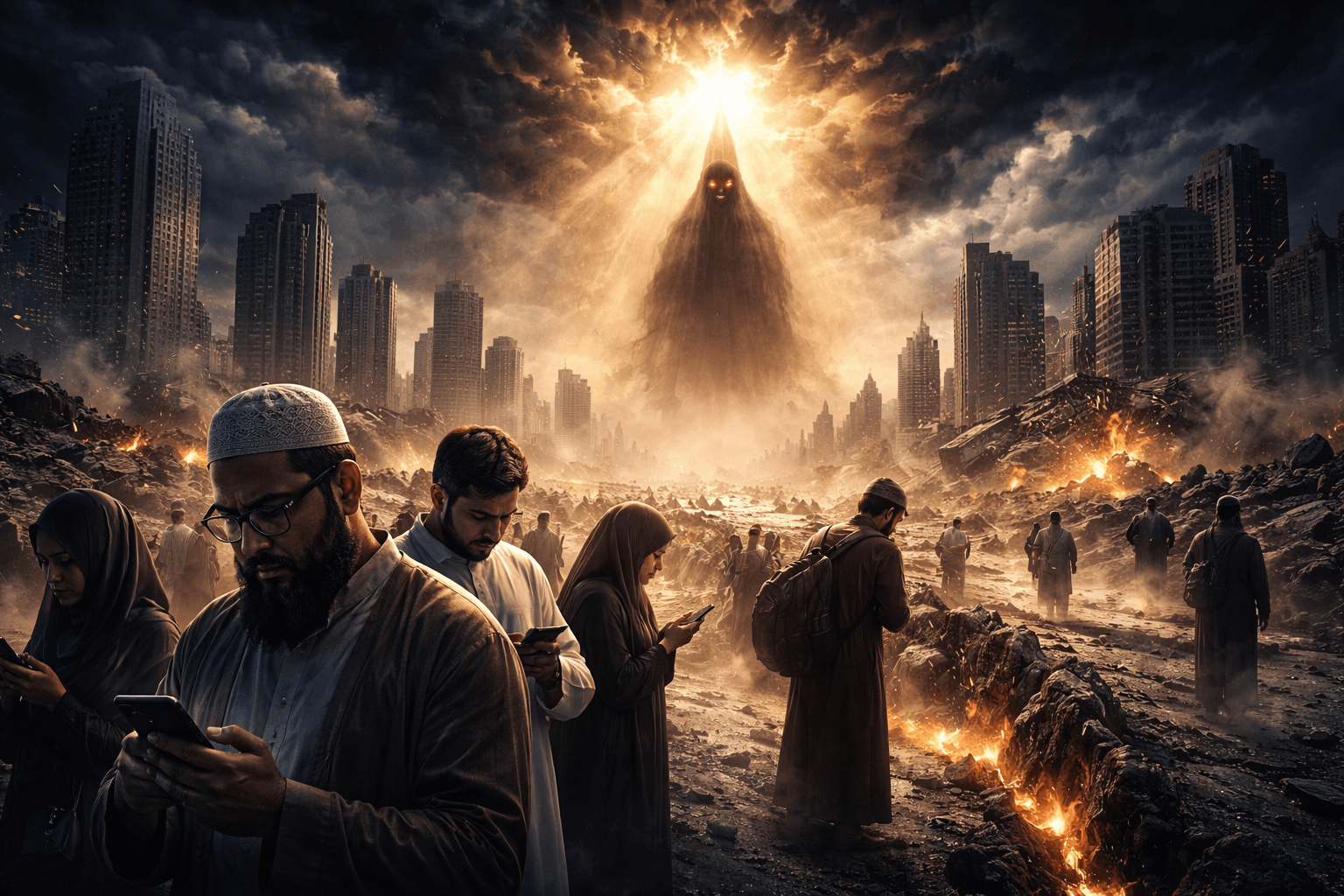
What Happens to Muslims Before Judgment Day
Introduction
The question of what will happen before the Day of Judgment has fascinated Muslims for centuries. It is a topic deeply rooted in Islamic belief, drawing from the Qur’an and the sayings of the Prophet Prophet Muhammad.
For Muslims, the Day of Judgment—known as Yawm al-Qiyamah—is not just a distant event, but a reality that shapes daily life, actions, and spiritual awareness. Understanding the signs and conditions leading up to it helps believers stay mindful, prepared, and connected to their faith.
This article explores, in depth, what Muslims are expected to experience before the Day of Judgment, including major and minor signs, moral challenges, global events, and spiritual tests.
Understanding the Day of Judgment in Islam
The Day of Judgment (Yawm al-Qiyamah) is when all humans will be resurrected and held accountable for their deeds. The Qur’an describes it as a day of immense significance, where justice will prevail and every action—big or small—will be judged.
Muslims believe that before this day arrives, several clear signs will occur. These signs are divided into two categories:
-
Minor Signs (Ashrat al-Sughra)
-
Major Signs (Ashrat al-Kubra)
Both sets of signs provide insight into the conditions Muslims will face.
Minor Signs Before the Day of Judgment
Minor signs are events that gradually unfold over time. Many Islamic scholars believe that several of these signs have already occurred or are currently happening.
1. Widespread Moral Decline
One of the most discussed signs is the decline in morality. Honesty, modesty, and integrity will become rare. Society will normalize actions that were once considered sinful.
Muslims may find themselves living in environments where:
-
Truth is ignored
-
Dishonesty is rewarded
-
Immorality is widespread
This creates a difficult test of faith.
2. Increase in Knowledge but Decrease in Wisdom
While access to information will grow rapidly, true understanding of religion may decrease. People may have knowledge but lack guidance.
This is especially relevant in today’s digital age, where information is abundant but not always beneficial.
3. Widespread Corruption and Injustice
Corruption in leadership and injustice in society will increase. Trust will diminish, and power may be abused.
For Muslims, this period requires patience (sabr) and strong reliance on faith.
4. Increase in Natural Disasters
Earthquakes, floods, and other natural disasters will become more frequent. These events serve as reminders of human vulnerability and divine power.
5. Competition in Worldly Wealth
People will compete excessively in building wealth and status. Materialism will dominate, and spiritual values may be neglected.
Major Signs Before the Day of Judgment
The major signs are extraordinary events that will occur closer to the Day of Judgment. These are more dramatic and undeniable.
1. The Appearance of the Dajjal
One of the most significant events is the emergence of the Dajjal (False Messiah). He will deceive many people with his powers and claims.
Muslims are warned to:
-
Strengthen their faith
-
Learn protective supplications
-
Stay away from deception
2. The Return of Prophet Isa (Jesus)
Muslims believe that Isa (Jesus) will return before the Day of Judgment. He will defeat the Dajjal and restore justice.
His return is a symbol of truth overcoming falsehood.
3. The Emergence of Gog and Magog
Known as Ya’juj and Ma’juj, these groups will cause widespread chaos and destruction across the earth.
Their appearance will be one of the most terrifying signs.
4. The Rising of the Sun from the West
One of the clearest signs is when the sun rises from the west instead of the east. At that moment:
-
Repentance will no longer be accepted
-
Faith will no longer benefit those who did not believe before
5. The Beast of the Earth
A mysterious creature will emerge and speak to people, distinguishing believers from non-believers.
What Muslims Will Experience Spiritually
1. Severe Tests of Faith
Muslims will face trials that challenge their beliefs. Holding onto faith during these times will be extremely difficult but highly rewarded.
2. Feeling Like Strangers
Practicing Islam may feel unusual or even difficult in society. The Prophet Prophet Muhammad said Islam began as something strange and will return to being strange.
3. Increased Importance of Patience
Patience (sabr) will become one of the most valuable qualities. Muslims will need to endure hardship while maintaining their faith.
4. Strengthening of True Believers
Despite challenges, true believers will grow stronger. Their faith will deepen, and they will remain steadfast.
How Muslims Can Prepare
Strengthening Faith (Iman)
-
Regular prayer (Salah)
-
Reading the Qur’an
-
Remembering Allah (Dhikr)
Seeking Knowledge
Authentic Islamic knowledge helps Muslims recognize truth and avoid deception.
Avoiding Fitnah (Trials)
Staying away from environments that weaken faith is essential.
Making Constant Repentance
Before the final signs appear, repentance remains open. Muslims are encouraged to seek forgiveness regularly.
Lessons for Today’s Muslims
The signs of the Day of Judgment are not meant to create fear alone—they serve as guidance.
They remind Muslims to:
-
Stay grounded in faith
-
Avoid worldly distractions
-
Prepare for the Hereafter
Conclusion
The events leading up to the Day of Judgment are both powerful and humbling. From moral decline to major cosmic signs, Muslims will face a series of tests that challenge their faith and character.
Yet, within these challenges lies an opportunity—to strengthen belief, increase good deeds, and prepare for the ultimate meeting with Allah.
Understanding what will happen before the Day of Judgment is not just about the future—it’s about how we live today.

Leave a Reply