
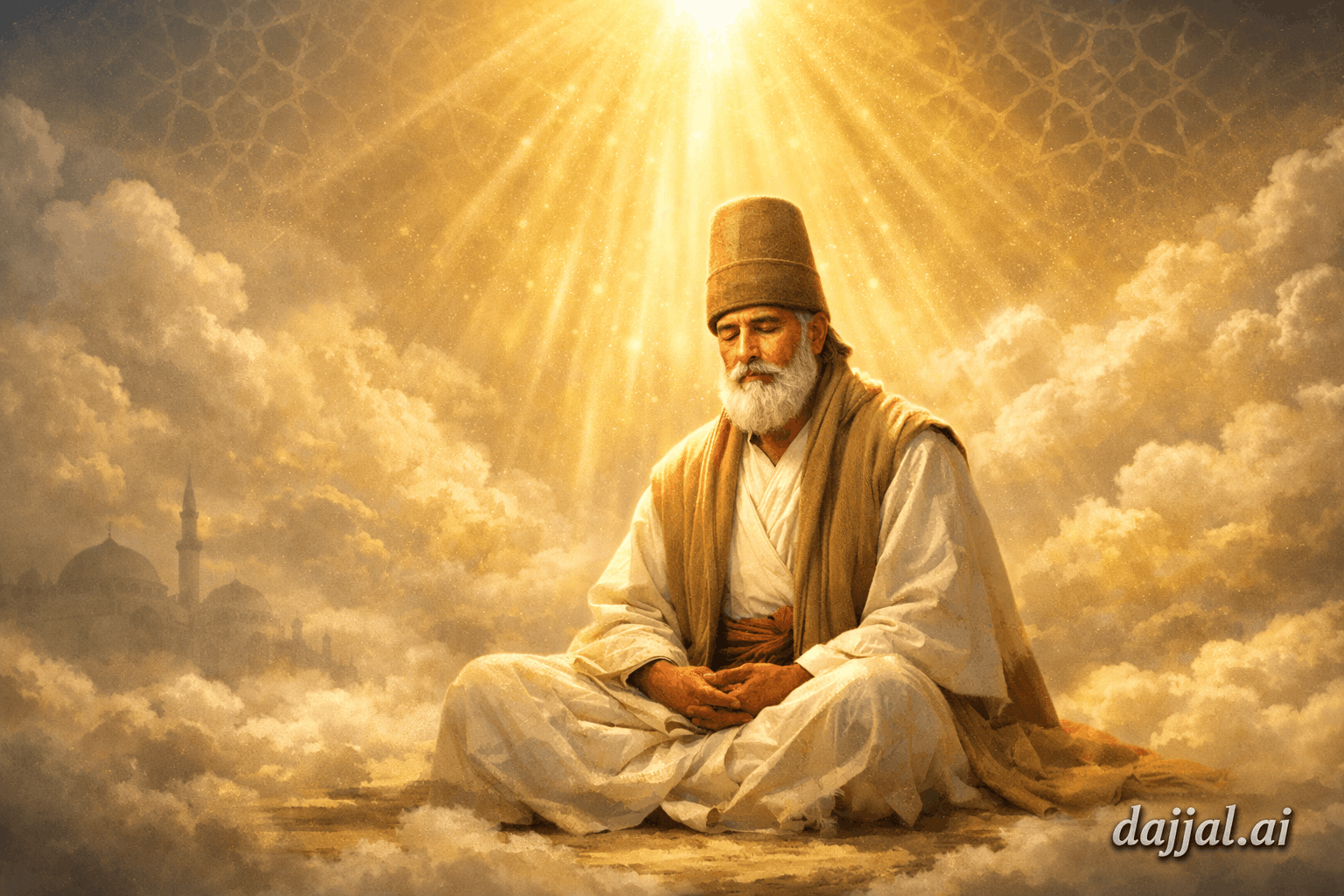
Rumi’s Contribution to Sufism: Path of Spiritual Love & Awakening
Jalaluddin Rumi, widely known as Rumi, remains one of the most influential figures in Islamic mysticism or Sufism. His life and works transcend geographical, cultural, and religious boundaries, inspiring millions across the world. Born in 1207 in Balkh, in present-day Afghanistan, Rumi’s journey led him to Konya (modern-day Turkey), where he became a beacon of spiritual wisdom. His teachings emphasize divine love, the inner journey of the soul, and the transformative power of spiritual awakening.
Rumi’s contribution to Sufism is unparalleled. Through his poetry, philosophy, and practices, he articulated a deep understanding of God, the self, and the universe. His magnum opus, the Masnavi-ye Ma’navi, often called the ‘Quran in Persian,’ remains a guide for seekers of truth.
This article delves deep into Rumi’s spiritual legacy, his philosophy, and how he shaped Sufism, making it accessible and profound for generations.
1. Rumi’s Early Life and Spiritual Influences
Rumi was born into a scholarly family. His father, Bahauddin Walad, was a theologian and mystic, who provided Rumi with early exposure to Islamic teachings. From childhood, Rumi exhibited a profound spiritual sensitivity and curiosity about divine mysteries.
The turning point in his life came when he met Shams of Tabriz, a wandering dervish, whose intense spiritual insight awakened Rumi’s inner consciousness. Shams became Rumi’s spiritual companion, guiding him toward love-based mysticism, emphasizing the union with the divine through devotion and heartfelt practice.
2. Core Teachings and Philosophy
Rumi’s teachings can be summarized into several core principles:
- Divine Love as the Path to God
- Rumi taught that love is the essence of the universe and the ultimate pathway to God. He believed that through love, one transcends ego, attachment, and worldly distractions.
- Unity of Being (Tawhid)
- A recurring theme in Rumi’s works is the interconnectedness of all existence. Everything in the universe reflects the divine reality, and recognizing this unity is essential for spiritual growth.
- Self-Realization and Inner Journey
- According to Rumi, true knowledge is not intellectual but experiential. The journey inward, meditation, and self-purification are essential steps in attaining closeness to God.
- Compassion and Service
- Rumi emphasized serving humanity as a form of worship. Helping others and acting with compassion is an expression of divine love.
3. The Masnavi: Rumi’s Magnum Opus
The Masnavi, written in Persian, is a six-volume poetic masterpiece, covering theology, ethics, metaphysics, and spiritual psychology.
- Purpose: To guide seekers on the spiritual path through allegories, parables, and moral stories.
- Impact: The Masnavi became a foundational text in Sufi study circles and remains widely studied globally.
Some key themes include:
- Love as the force that binds creation.
- The dangers of ego and attachment.
- The importance of guidance from a spiritual mentor.
4. Rumi’s Contribution to the Spread of Sufism
Rumi’s influence on Sufism can be seen in several dimensions:
- Popularization of Sufi Philosophy:
- Rumi made complex metaphysical concepts accessible to ordinary people through poetry and stories.
- Mevlevi Order (Whirling Dervishes):
- After Rumi’s death, his followers formed the Mevlevi Sufi Order, preserving and propagating his teachings. The whirling dance, or Sema, symbolizes the soul’s journey toward divine love.
- Global Reach:
- Rumi’s works were translated into many languages, spreading Sufi ideals worldwide and influencing both Islamic and non-Islamic spiritual traditions.
5. Spiritual Practices Inspired by Rumi
Rumi emphasized practical spiritual exercises, including:
- Dhikr (Remembrance of God): Constant meditation on divine names.
- Sema (Whirling Dance): Physical expression of spiritual ecstasy.
- Poetry Recitation: Internalizing spiritual wisdom through lyrical expression.
These practices encourage seekers to internalize love, humility, and divine consciousness, embodying Sufi teachings in daily life.
6. Rumi’s Enduring Legacy
Rumi’s legacy transcends the boundaries of religion, nationality, and culture. His teachings emphasize the universality of love and the transformative power of spiritual realization.
- Cultural Impact: Rumi’s poetry has influenced literature, art, and music around the world.
- Modern Relevance: In today’s fast-paced world, Rumi’s message of love, compassion, and inner reflection offers guidance for personal growth and spiritual fulfillment.
Rumi exemplifies how spiritual love can transform both the individual and society, encouraging harmony, understanding, and peace.
7. Conclusion
Jalaluddin Rumi’s contribution to Sufism is timeless. By intertwining divine love, mystical insight, and practical spiritual guidance, he created a path accessible to all seekers. His legacy continues to inspire millions worldwide, making him not only a Sufi master but also a global symbol of spiritual wisdom and human unity.
Rumi’s life reminds us that the essence of Sufism lies not in rituals alone but in the transformation of the heart and consciousness through love, devotion, and the pursuit of truth.
Leave a Reply