
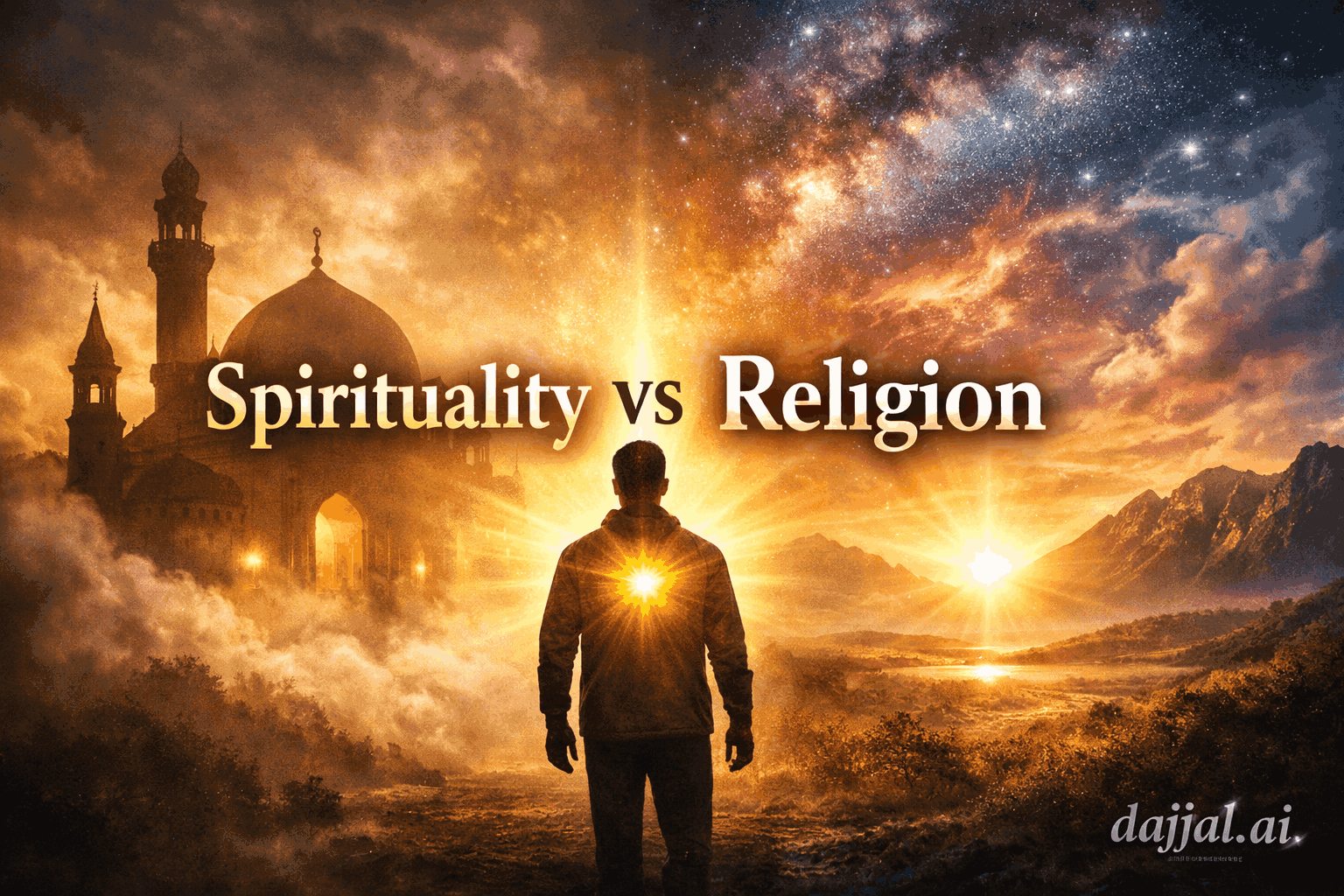
Is Spirituality Only Religion or Something More?
A Question That Shapes Inner Life
In today’s fast-paced world, more people are asking deeper questions about life, purpose, and inner peace. One of the most common—and often misunderstood—questions is: Is spirituality only religion, or is there something beyond it?
For centuries, spirituality and religion have been closely linked. Many assume they are the same. Yet, as modern thinking evolves and individuals seek personal meaning beyond traditions, the distinction between the two becomes clearer.
This article explores spirituality in depth—what it truly means, how it differs from religion, and why it matters in your personal growth. By the end, you’ll have a clearer understanding of whether spirituality is confined within religious boundaries or if it expands far beyond them.
What Is Spirituality?
Spirituality is a broad and deeply personal concept. At its core, it refers to the search for meaning, purpose, and connection—whether that connection is with a higher power, nature, humanity, or one’s inner self.
Unlike structured systems, spirituality does not follow strict rules. It is more about experience than doctrine.
Key Elements of Spirituality
- Inner Awareness: Understanding your thoughts, emotions, and true self
- Purpose Seeking: Asking “Why am I here?”
- Connection: Feeling linked to something greater than yourself
- Growth: Evolving mentally, emotionally, and morally
Spirituality is not limited to temples, mosques, or churches. It can be found in silence, nature, art, meditation, or even everyday life experiences.
What Is Religion?
Religion, on the other hand, is an organized system of beliefs, practices, rituals, and worship centered around a specific doctrine or faith.
It typically includes:
- Sacred texts (like the Quran, Bible, or Vedas)
- Established rituals and traditions
- Community-based worship
- Defined moral codes
Religion provides structure, guidance, and a shared identity for millions of people around the world.
Spirituality vs Religion: Key Differences
While they may overlap, spirituality and religion are not identical. Understanding their differences helps clarify the bigger picture.
1. Structure vs Freedom
Religion is structured with defined beliefs and rules. Spirituality is flexible and personal.
2. External vs Internal Focus
Religion often emphasizes external practices—prayer, rituals, gatherings.
Spirituality focuses on internal transformation and awareness.
3. Community vs Individual Journey
Religion is usually practiced in a community setting.
Spirituality is often a personal, individual journey.
4. Belief vs Experience
Religion asks you to believe.
Spirituality encourages you to experience.
Can You Be Spiritual Without Being Religious?
Yes—and increasingly, many people identify this way.
Being spiritual without religion means:
- You seek meaning without following a specific doctrine
- You believe in personal growth and inner peace
- You explore different philosophies, not just one system
This path allows freedom but also requires self-discipline and reflection.
Can You Be Religious Without Being Spiritual?
Surprisingly, yes.
A person can follow religious rituals and traditions without deeply connecting with their inner self. This is often referred to as “mechanical faith”—practicing religion without experiencing its deeper meaning.
True spirituality can enhance religion by bringing sincerity, mindfulness, and emotional connection to religious practices.
The Overlap: Where Spirituality and Religion Meet
Despite their differences, spirituality and religion are not enemies. In fact, they often complement each other.
Religion can be a pathway to spirituality when:
- Rituals are performed with awareness
- Teachings are deeply understood, not blindly followed
- Faith leads to inner transformation
Many spiritual traditions originated within religions but evolved into broader philosophies.
Why Spirituality Is Growing Beyond Religion
In recent years, spirituality has expanded beyond traditional religious frameworks. Several factors contribute to this shift:
1. Globalization
Exposure to multiple cultures and beliefs allows people to explore beyond one tradition.
2. Science and Psychology
Modern science supports practices like meditation for mental health, bridging spirituality and evidence-based benefits.
3. Individualism
People today value personal experience over inherited beliefs.
4. Dissatisfaction with Institutions
Some individuals feel disconnected from organized religion due to rigid structures or past experiences.
Forms of Spirituality Beyond Religion
Spirituality takes many forms outside traditional religion. Some popular paths include:
1. Meditation and Mindfulness
Practices that focus on present awareness and inner peace.
2. Connection with Nature
Finding meaning and calm through nature—forests, oceans, and mountains.
3. Philosophy and Self-Inquiry
Exploring life through deep thinking and questioning.
4. Energy and Healing Practices
Such as yoga, chakra balancing, or holistic healing.
5. Art and Creativity
Expressing spirituality through music, painting, or writing.
The Role of Spirituality in Mental Health
Spirituality is not just philosophical—it has real-life benefits.
Emotional Benefits
- Reduces stress and anxiety
- Improves emotional resilience
- Creates a sense of peace
Psychological Benefits
- Enhances self-awareness
- Promotes positive thinking
- Encourages personal growth
Social Benefits
- Builds empathy and compassion
- Strengthens relationships
Many therapists now incorporate spiritual elements into healing practices.
Common Misconceptions About Spirituality
“Spirituality Is Only for Religious People”
False. Spirituality can exist independently of religion.
“Spiritual People Must Follow Certain Practices”
Not necessarily. Spirituality is personal and flexible.
“Spirituality Is Unscientific”
Modern research supports many spiritual practices like meditation and mindfulness.
“Religion and Spirituality Cannot Coexist”
They can—and often do—beautifully complement each other.
How to Explore Your Own Spiritual Path
If you’re curious about spirituality beyond religion, here are simple steps to begin:
1. Start with Self-Reflection
Ask yourself:
- What gives my life meaning?
- What brings me peace?
2. Practice Mindfulness
Spend a few minutes daily in silence or meditation.
3. Stay Open-Minded
Explore different ideas without judgment.
4. Connect with Nature
Nature often provides clarity and calm.
5. Read and Learn
Books, philosophy, and personal stories can deepen your understanding.
Spirituality in Daily Life
Spirituality is not limited to special moments—it can be part of everyday living.
You can practice spirituality by:
- Being fully present in conversations
- Showing kindness and empathy
- Practicing gratitude
- Reflecting on your actions
It’s about how you live, not just what you believe.
The Balance: Finding Your Own Truth
There is no one-size-fits-all answer to spirituality. Some people find deep meaning in religion. Others find it outside religious frameworks.
The key is balance:
- Respect traditions if they resonate with you
- Explore beyond them if you feel the need
- Stay true to your personal experience
Your spiritual journey is uniquely yours.
Conclusion: Beyond Labels and Boundaries
So, is spirituality only religion?
The answer is no—but religion can be a part of spirituality.
Spirituality is much broader. It is a universal human experience that goes beyond labels, doctrines, and institutions. It lives within your thoughts, your emotions, your connections, and your search for meaning.
Whether you follow a religion, explore independent spirituality, or combine both, what truly matters is your inner growth, awareness, and connection to something greater than yourself.
In the end, spirituality is not about what you follow—it’s about who you become.

Leave a Reply