
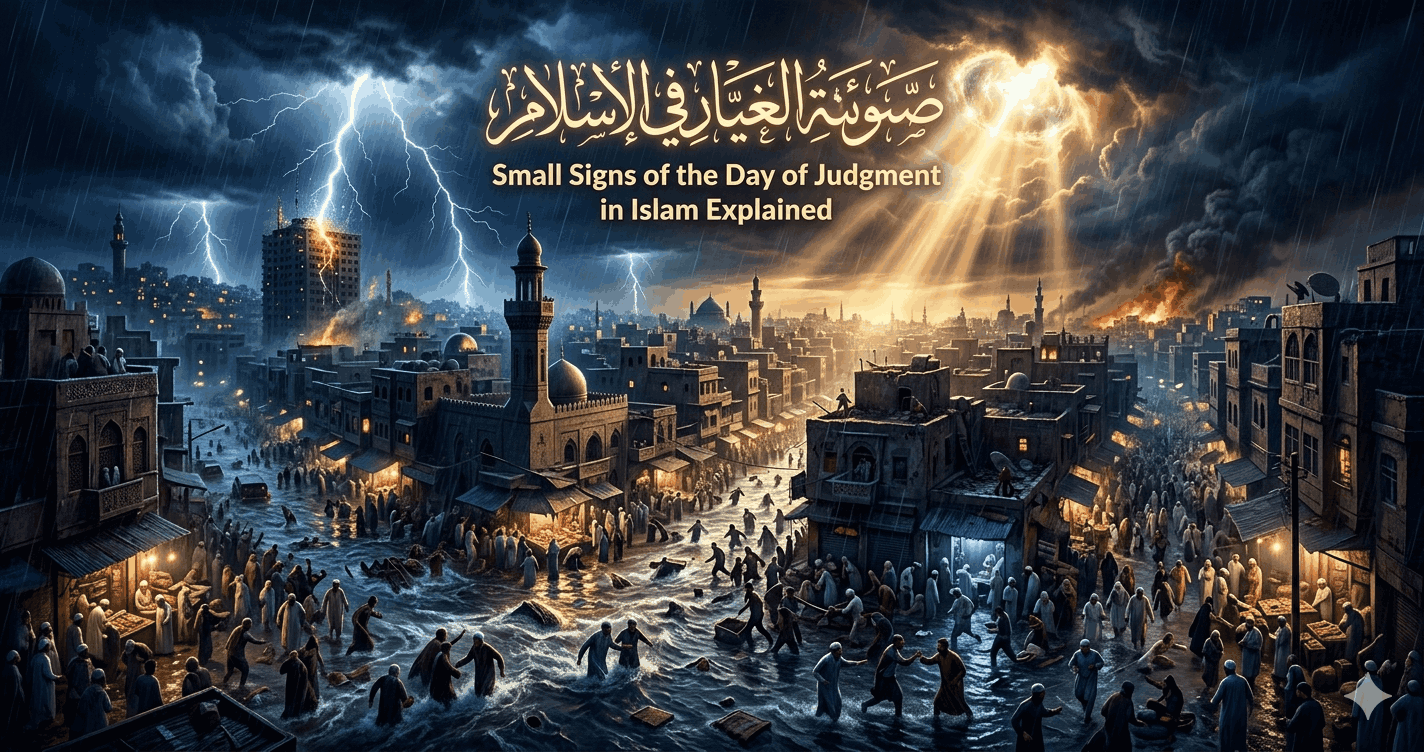
The Day of Judgment (Qiyamah) is a central belief in Islam, reminding humanity of accountability and the transient nature of worldly life. While major signs like the appearance of Dajjal and the descent of Prophet Isa (AS) are widely known, the small signs of the Day of Judgment often go unnoticed. These signs gradually appear over time and offer believers insight into the approaching end. This article delves into the small signs mentioned in authentic Islamic sources, explaining their meanings and implications.
1. Understanding the Concept of Qiyamah
In Islam, the Day of Judgment marks the end of the world, when Allah will resurrect all humans for accountability. The Qur’an frequently reminds believers about Qiyamah, urging them to lead righteous lives. Both major and minor signs serve as indicators, preparing humanity mentally and spiritually for this inevitable day.
2. The Importance of Small Signs
Small signs are gradual changes that occur in society, often overlooked but deeply significant. Unlike major signs, these minor signs manifest subtly in human behavior, morality, and natural phenomena. They serve as reminders, allowing believers to reflect, repent, and reform before the final reckoning.
3. List of Small Signs in Islam
Widespread Immorality and Disobedience
One of the earliest small signs is the rise of immorality and disobedience to Allah. People increasingly engage in sinful acts openly, forgetting the moral boundaries set by Islam. The Prophet Muhammad (SAW) warned that such behavior will become common as the Day of Judgment approaches.
Disintegration of Family Ties
Respect and care within family structures will weaken. Children may disobey parents, family loyalty may decline, and the institution of marriage may face challenges. Prophet Muhammad (SAW) said, “A time will come when people will leave the prayer, when ties of kinship will be broken, and the world will be filled with injustice.”
Dishonesty and Deception in Trade
Commerce and trade will become rife with dishonesty. People will cheat, manipulate, and exploit others for personal gain. Islam emphasizes honesty in business, but the prevalence of unethical practices is a small sign of approaching Qiyamah.
Spread of Ignorance and Decline of Knowledge
Knowledge of Islam will diminish, and ignorance will spread, particularly among the youth. Religious scholars may be few, and people will increasingly rely on personal opinions rather than authentic teachings.
Prevalence of Alcohol, Drugs, and Vice
Substance abuse, including alcohol and drugs, will become common. Societies will indulge in immoral pleasures, neglecting spiritual obligations. Such habits are highlighted in Hadith as indicators of societal decay preceding Qiyamah.
Natural Disasters and Environmental Change
While natural disasters occur naturally, an increase in earthquakes, floods, and other calamities is considered a small sign. These events remind humans of Allah’s power and the fragility of worldly life.
Rising Wealth and Materialism
Material wealth will become a source of pride rather than a blessing to share. People will compete in luxury and status, often neglecting spiritual growth. Prophet Muhammad (SAW) warned that extreme materialism is a sign of the approaching end.
Decline of Mosques and Religious Practice
Mosques may see fewer visitors, and obligatory prayers may be neglected. People will prioritize worldly life over spiritual duties. This decline in religious commitment is repeatedly mentioned in prophetic traditions as a small sign.
Increase in Unjust Leaders
Governance will see corruption and oppression. Leaders will exploit their people and ignore justice, causing widespread social imbalance. The Prophet (SAW) described rulers who are cruel and unjust as part of the minor signs.
Erosion of Respect for the Elderly
The younger generation may disregard the elderly, showing impatience and lack of respect. Traditionally, respect for elders was considered essential in Islam, and its erosion is highlighted as a significant warning sign.
4. Wisdom Behind Small Signs
Small signs serve multiple purposes:
-
Reminder to Repent: Encouraging believers to return to righteousness.
-
Awareness: Helping society recognize moral and spiritual decay early.
-
Preparation: Mentally and spiritually preparing humanity for Qiyamah.
These signs function as both a warning and guidance, emphasizing that the path to salvation lies in faith, knowledge, and ethical conduct.
5. How Believers Should Respond
Believers are encouraged to:
-
Strengthen Faith: Perform regular prayers and seek Allah’s guidance.
-
Follow the Sunnah: Adhere to Prophet Muhammad’s (SAW) teachings.
-
Promote Morality: Act as examples of honesty, respect, and kindness.
-
Educate and Spread Knowledge: Preserve and teach Islamic knowledge to future generations.
-
Repent and Seek Forgiveness: Continuously turn to Allah for mercy.
By actively responding, believers not only safeguard themselves but also positively influence society, slowing moral decline.
6. Conclusion
The small signs of the Day of Judgment in Islam are subtle yet significant indicators of approaching Qiyamah. They manifest in morality, social structures, natural events, and spiritual decay. Recognizing these signs allows believers to reflect, reform, and prepare for the inevitable day when accountability before Allah will occur. Understanding and acting upon these signs is essential for spiritual growth, societal harmony, and a life aligned with Islamic principles.

Leave a Reply