
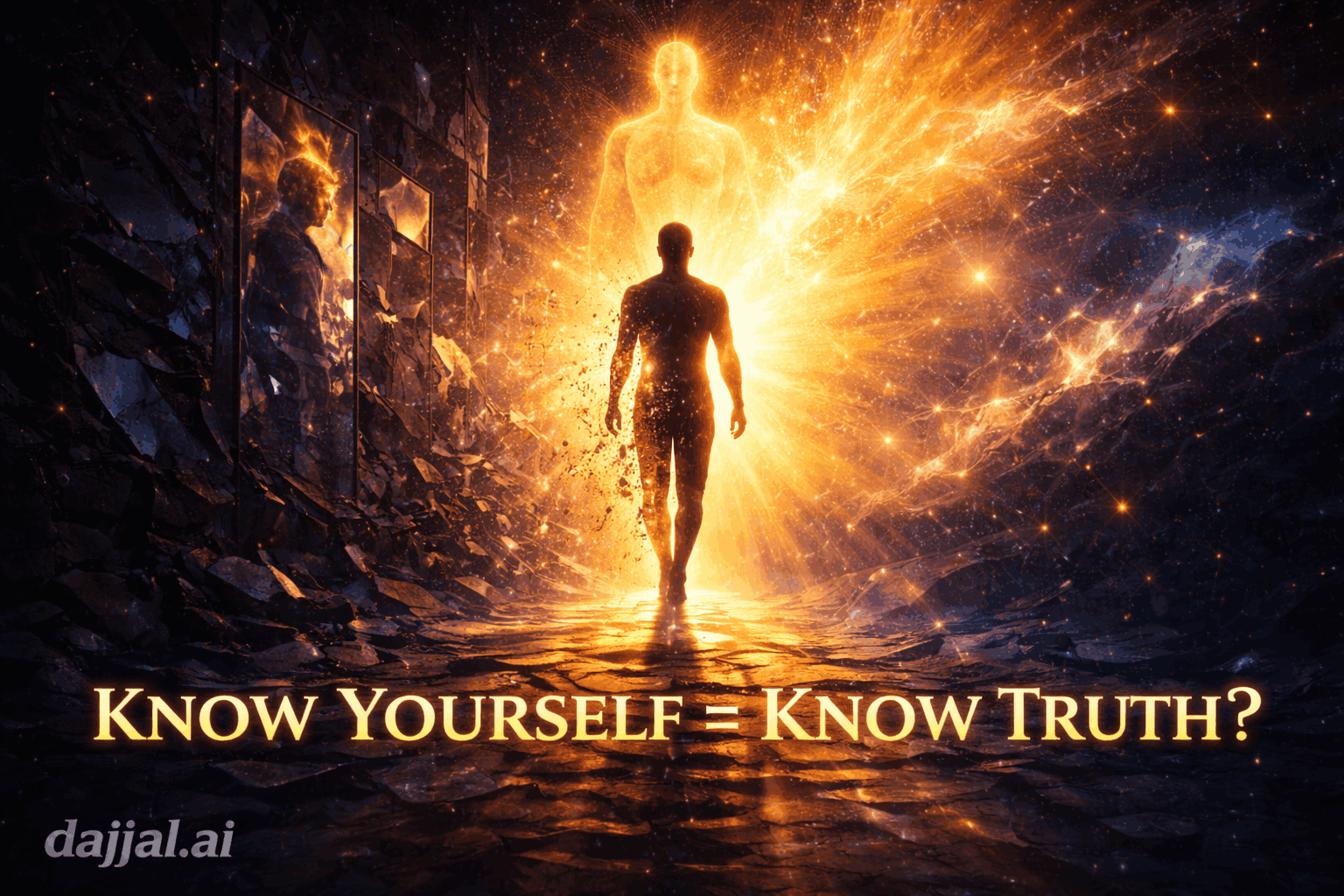
Is Knowing Yourself Knowing God? A Deep Exploration of Spiritual Truth
The Question That Changes Everything
For centuries, thinkers, mystics, and seekers have asked a profound question:
“If I truly know myself, do I come to know God?”
At first glance, this may sound philosophical. But in reality, it is one of the deepest spiritual inquiries a human can make.
Because hidden within this question lies a powerful possibility:
What if the path to the Divine is not somewhere far away…
but within you?
Most people search for God externally—through rituals, beliefs, places, or traditions. Yet many spiritual traditions hint at a different direction:
“Know yourself, and you will know the truth.”
But what does that really mean?
Is it symbolic—or literal?
This article explores that question in depth, uncovering the hidden relationship between self-awareness and divine realization.
Understanding “Knowing Yourself”
Knowing yourself is not simply about personality or identity.
It is about going beyond:
- Your name
- Your background
- Your thoughts
- Your emotions
It is the process of discovering:
- Who you are beneath your mind
- What remains when all roles disappear
- The awareness that observes everything
Most people live identified with their mind.
They think:
- “I am my thoughts”
- “I am my past”
- “I am my story”
But deep self-inquiry reveals something surprising:
You are the observer of all these things—not the things themselves.
Understanding “Knowing God”
Before connecting self-knowledge to God, we must clarify what “knowing God” means.
For many, God is:
- A belief system
- A religious concept
- A distant power
But in deeper spirituality, God is often understood as:
- Ultimate truth
- Pure consciousness
- The source of all existence
Knowing God, therefore, is not just intellectual.
It is experiential.
It is about:
- Direct awareness
- Deep connection
- Inner realization
The Connection Between Self and the Divine
Now comes the core insight.
If God is pure consciousness…
And your deepest self is awareness…
Then what separates you from the Divine?
This is where self-knowledge becomes powerful.
When you strip away:
- Ego
- Identity
- Conditioning
You are left with awareness.
And many spiritual traditions suggest:
That awareness is not separate from the Divine.
Different Perspectives on This Truth
1. Mystical Perspective
Mystics across traditions have suggested that:
- The Divine is within
- The self is a reflection of the greater whole
- Knowing yourself leads to knowing truth
This does not mean “you are God” in an ego sense.
It means:
- Your deepest essence is connected to the Divine source
2. Psychological Perspective
From a psychological view:
- Self-knowledge brings clarity
- It reduces illusion
- It leads to inner peace
While this may not directly define God, it creates a state where deeper insight becomes possible.
3. Philosophical Perspective
Philosophically, the question becomes:
If you understand consciousness fully,
have you understood reality itself?
And if God is the ultimate reality,
then the answer becomes… yes.
Why Most People Misunderstand This Idea
Confusing Ego With Self
Many think:
“I know myself” means “I know my identity.”
But identity is not the true self.
Taking It Literally or Religiously
Some reject the idea because it seems contradictory to religious teachings.
But the deeper meaning is symbolic and experiential.
Avoiding Inner Work
Self-knowledge requires:
- Honesty
- Courage
- Facing uncomfortable truths
Many prefer external paths because they are easier.
The Process of Knowing Yourself Deeply
Step 1: Observation
Watch your thoughts and emotions.
Step 2: Detachment
Realize that you are not those thoughts.
Step 3: Inquiry
Ask:
- Who is observing this?
Step 4: Silence
As inquiry deepens, the mind quiets.
Step 5: Awareness
You begin to experience pure awareness.
Step 6: Realization
You recognize something profound:
The observer and existence are not separate.
What Happens When You Truly Know Yourself?
When self-knowledge becomes deep, several shifts occur:
- You stop identifying with fear
- You feel less controlled by the mind
- You experience inner peace
- You see life more clearly
And sometimes, something even deeper happens:
A sense of connection beyond individuality.
A feeling that:
- You are part of something greater
- You are not separate from existence
Does Knowing Yourself Mean Knowing God?
The answer is both yes and no.
YES — In a Deeper Sense
If:
- You go beyond ego
- You discover pure awareness
- You experience unity
Then knowing yourself can lead to knowing the Divine essence.
NO — In a Literal Sense
Knowing your personality, history, or identity
does not mean knowing God.
Only deep, inner awareness leads to that realization.
The Subtle Truth Most People Miss
The goal is not to “become” God.
The goal is to remove what blocks your awareness of truth.
Because truth is already present.
Practical Ways to Begin This Journey
1. Ask Deep Questions
- Who am I beyond my mind?
2. Practice Meditation
Silence helps you go beyond thoughts.
3. Observe Without Judgment
Awareness grows through observation.
4. Let Go of False Identity
You are more than your story.
5. Stay Curious
Spiritual truth unfolds gradually.
Common Mistakes in This Path
Intellectualizing Everything
Understanding is not the same as experiencing.
Expecting Instant Answers
This journey takes time.
Seeking External Validation
Truth is personal and internal.
Conclusion: The Journey Within
So, is knowing yourself the same as knowing God?
Not at the surface level.
But at the deepest level—there is a connection.
When you go beyond:
- Mind
- Ego
- Identity
You discover awareness.
And in that awareness, many find something sacred.
Something beyond words.
Something that feels like truth.
The journey to God may not begin in the sky…
It may begin within you.

Leave a Reply