
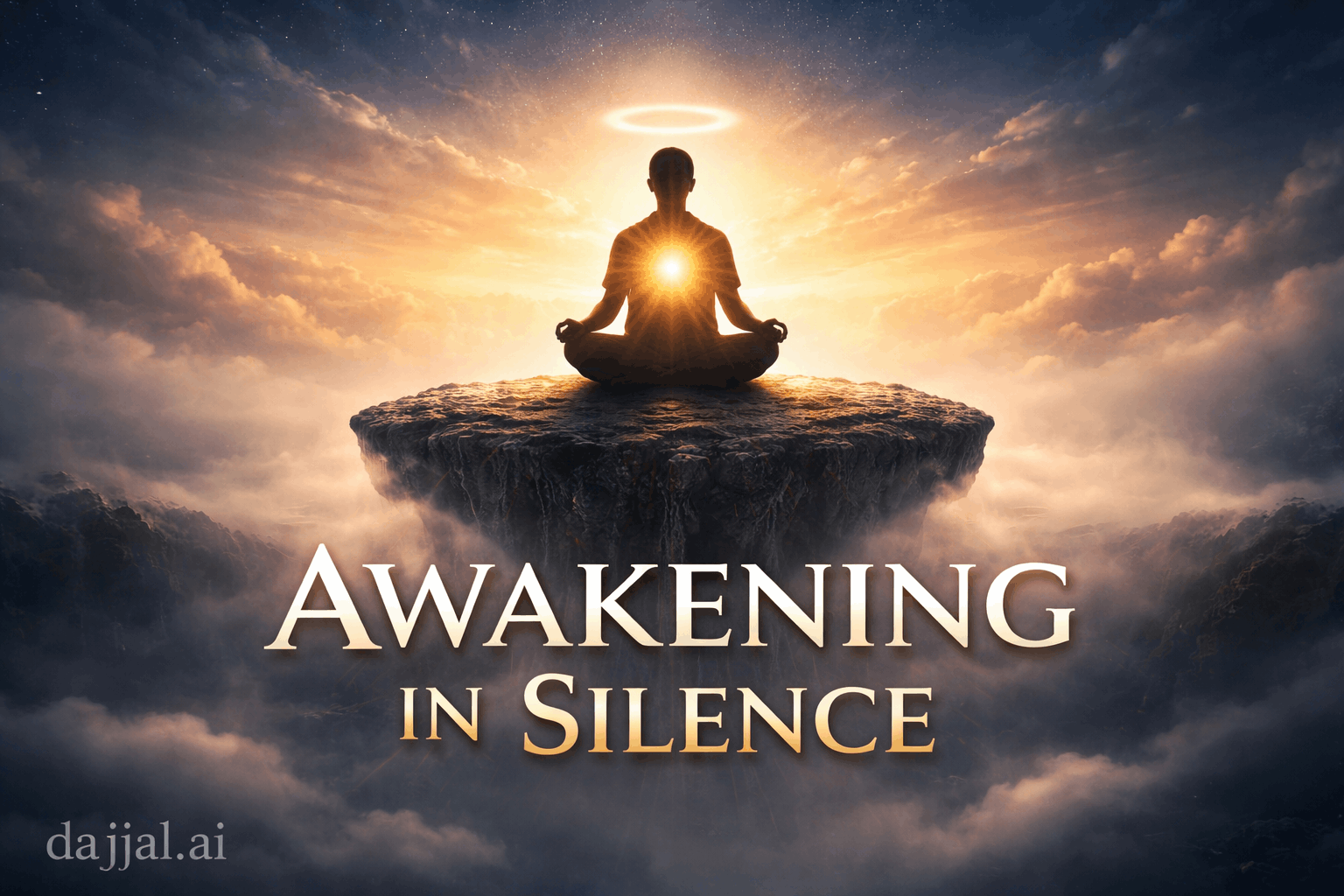
Awakening in Silence: Spiritual Power of Meditation
When Silence Speaks
In a world overwhelmed by noise, distractions, and constant digital stimulation, silence has become rare—and almost uncomfortable. Yet, within that silence lies something profound: a doorway to inner awakening. Meditation is not merely a technique to relax the mind; it is a deeply spiritual journey that reconnects us with our true essence.
“Awakening in Silence” is not just a poetic phrase. It reflects a real transformation that occurs when we step away from external chaos and begin listening to the quiet within. Through meditation, silence becomes alive—filled with awareness, clarity, and spiritual depth.
This article explores the spiritual dimensions of meditation, how silence acts as a catalyst for awakening, and why this ancient practice continues to hold relevance in our modern lives.
What Is Meditation Beyond Relaxation?
Many people approach meditation as a stress-relief tool. While it certainly helps reduce anxiety and calm the mind, its deeper purpose goes far beyond relaxation.
Meditation, in its truest form, is:
- A process of observing the mind without judgment
- A pathway to self-awareness and inner truth
- A method to transcend the ego and connect with something greater
When practiced consistently, meditation shifts from being an activity to becoming a state of being. You are no longer “doing” meditation—you are living it.
The Spiritual Dimension of Silence
Silence is often misunderstood. It is not the absence of sound, but the presence of awareness.
In meditation, silence becomes:
1. A Mirror of the Self
When external noise fades, your inner world becomes visible. Thoughts, emotions, fears, and desires surface—not to disturb you, but to be understood.
2. A Gateway to Consciousness
Silence allows you to move beyond the surface level of thinking into deeper layers of consciousness. Here, intuition replaces logic, and insight replaces confusion.
3. A Space for Transformation
True transformation doesn’t happen in noise—it happens in stillness. Silence gives you the clarity to see what needs to change and the strength to let go.
The Journey from Mind to Awareness
Meditation begins with the mind but does not end there. The journey unfolds in stages:
Stage 1: Restlessness
At first, the mind resists silence. Thoughts become louder, distractions increase, and sitting still feels difficult. This is normal.
Stage 2: Observation
Gradually, you begin to observe your thoughts rather than react to them. A subtle distance forms between “you” and your mind.
Stage 3: Stillness
With practice, thoughts slow down. Moments of silence appear—not forced, but natural.
Stage 4: Awareness
Eventually, you realize that you are not your thoughts. You are the awareness behind them. This is the beginning of spiritual awakening.
Ego Dissolution: The Hidden Power of Meditation
One of the most profound aspects of meditation is the dissolution of the ego.
The ego is the identity we build based on:
- Social roles
- Personal achievements
- External validation
While necessary for functioning in the world, the ego often creates suffering by making us overly attached to outcomes and perceptions.
Through meditation:
- You begin to see the ego as a construct
- Attachment to identity weakens
- A sense of freedom emerges
This does not mean losing yourself—it means discovering your true self beyond labels.
Inner Peace vs External Happiness
Modern society often teaches us to seek happiness externally—through success, relationships, or material possessions. However, these sources are temporary.
Meditation reveals a different truth:
- Peace is not something you find outside
- It is something you uncover within
Inner peace is stable, independent, and deeply fulfilling. It does not fluctuate based on circumstances.
The Role of Breath in Spiritual Awakening
Breath is more than a biological function—it is a bridge between the body and the mind.
In meditation, focusing on the breath helps:
- Anchor your attention in the present moment
- Calm the nervous system
- Create a rhythm of awareness
As your awareness of breath deepens, your connection to the present moment strengthens. And in that present moment, awakening begins.
Meditation and Conscious Living
Meditation is not limited to sitting in silence for a few minutes each day. Its true impact is seen in how you live your life.
A person who meditates regularly begins to:
- Respond instead of react
- Listen more deeply
- Act with intention rather than impulse
Every moment becomes an opportunity for awareness. Walking, eating, speaking—all become forms of meditation.
Overcoming Common Misconceptions
“I Can’t Stop My Thoughts”
Meditation is not about stopping thoughts. It is about observing them without attachment.
“I Don’t Have Time”
Even 10 minutes a day can create noticeable changes over time.
“Meditation Is Only for Spiritual People”
Meditation is for anyone seeking clarity, peace, and self-understanding—regardless of belief system.
The Science Behind Spiritual Experiences
Interestingly, modern science is beginning to validate what ancient traditions have long known.
Research shows that meditation:
- Reduces stress hormones like cortisol
- Increases gray matter in the brain
- Enhances emotional regulation
While science explains the physical effects, the spiritual experience goes beyond measurement. It is something that must be felt rather than proven.
Silence as a Teacher
In meditation, silence becomes your greatest teacher.
It teaches you:
- Patience
- Acceptance
- Awareness
Unlike external teachers, silence does not give direct answers. Instead, it guides you to discover your own truth.
Practical Steps to Begin Your Journey
If you are new to meditation, start simple:
1. Find a Quiet Space
Choose a place where you won’t be disturbed.
2. Sit Comfortably
No need for complex postures. Just sit with a straight spine.
3. Focus on Your Breath
Observe each inhale and exhale.
4. Let Thoughts Come and Go
Do not resist or engage with them.
5. Practice Daily
Consistency matters more than duration.
The Long-Term Transformation
With consistent practice, meditation leads to:
- Greater emotional stability
- Deeper self-awareness
- A sense of connection with life
You begin to see the world differently—not as something separate from you, but as an extension of your awareness.
Why Silence Matters More Than Ever
In today’s fast-paced world, silence is often avoided. We fill every moment with noise—music, notifications, conversations—anything to avoid being alone with our thoughts.
But silence is not something to fear.
It is where:
- Healing begins
- Clarity emerges
- Awakening unfolds
Choosing silence, even for a few minutes a day, can change the way you experience life.
Conclusion: Awakening Is Already Within You
Meditation does not give you something new—it reveals what has always been there.
The peace you seek, the clarity you desire, the truth you search for—all exist within you. Silence is simply the path that leads you there.
“Awakening in Silence” is not a destination. It is a journey—a continuous unfolding of awareness, presence, and inner truth.
And the best part?
You can begin right now, with just one breath.

Leave a Reply