
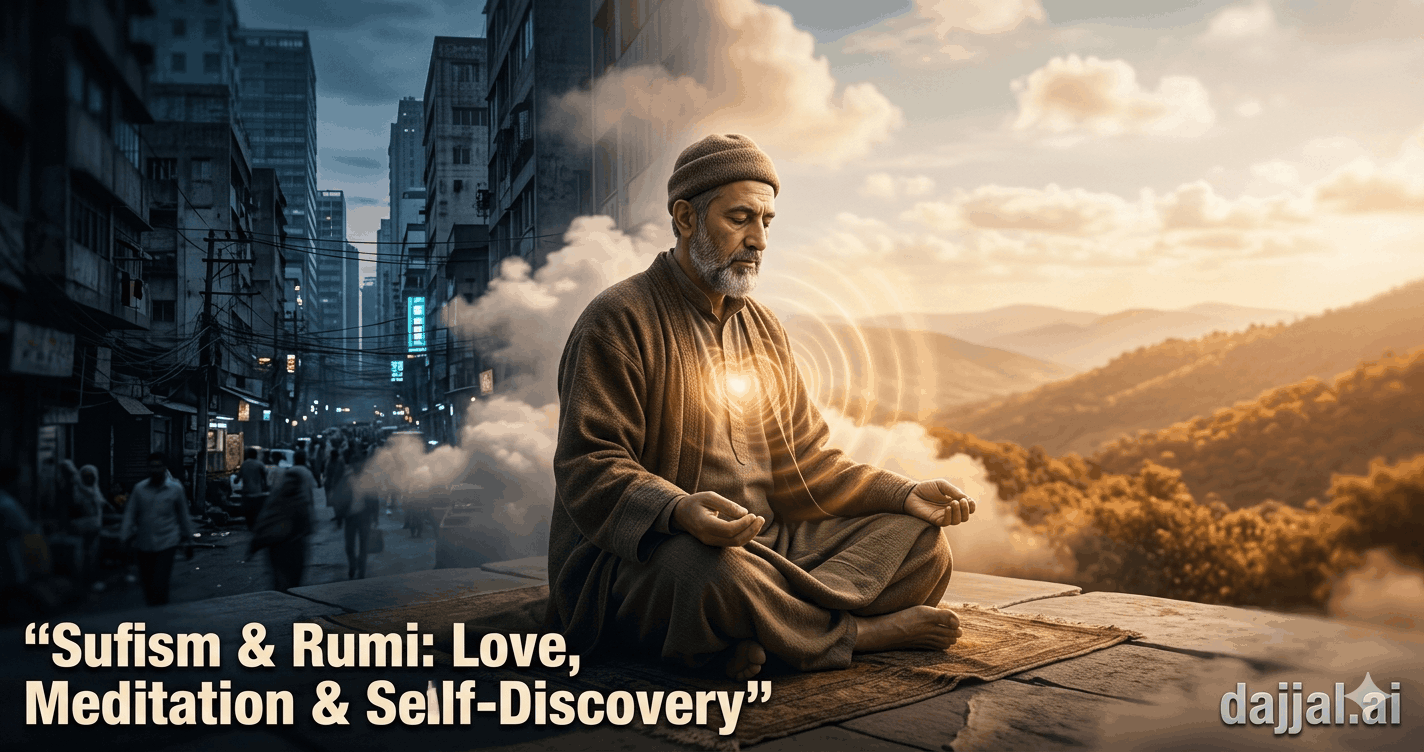
Sufism and Rumi: Love, Meditation & Self-Discovery
In a world filled with noise, distraction, and constant pressure, many people are searching for something deeper—something that goes beyond material success and surface-level happiness. This search often leads to spirituality, and among the most profound spiritual traditions is Sufism.
At the heart of Sufism lies a powerful message of love, inner peace, and self-discovery. And no figure represents this message more beautifully than Jalal ad-Din Muhammad Rumi, widely known as Rumi.
Rumi’s teachings transcend time, religion, and culture. His poetry speaks directly to the human soul, guiding us toward a deeper understanding of love, meditation, and the journey within. This article explores the deep relationship between Sufism and Rumi, focusing on how love, meditation, and self-discovery are interconnected paths to inner transformation.
What is Sufism?
Sufism is often described as the mystical dimension of Islam, but it is much more than a religious practice. It is a spiritual path focused on:
- Purifying the heart
- Connecting with the Divine
- Experiencing unconditional love
- Discovering the true self
Unlike rigid structures or rituals, Sufism emphasizes inner experience over outward form. It teaches that the ultimate truth lies within us, and through spiritual practice, we can awaken to it.
Core Principles of Sufism
- Love as the Ultimate Path
Love is not just an emotion—it is the force that connects everything. - Self-Purification
Removing ego, pride, and negativity from the heart. - Remembrance of God (Dhikr)
Continuous awareness of the Divine presence. - Unity (Tawhid)
Everything is interconnected; separation is an illusion.
Rumi: The Voice of Divine Love
Rumi is one of the most widely read poets in the world today. Born in the 13th century, his transformation from a scholar to a mystic poet began when he met his spiritual companion, Shams of Tabriz.
This meeting ignited a deep spiritual awakening in Rumi, leading him to express his experiences through poetry filled with love, longing, and divine connection.
Why Rumi Still Matters Today
- His message is universal
- His words speak to emotional and spiritual struggles
- His teachings are practical and transformative
Rumi didn’t just write poetry—he provided a roadmap for inner peace.
The Role of Love in Sufism and Rumi’s Teachings
Love as a Spiritual Force
In Sufism, love is not limited to human relationships. It is a divine energy that:
- Connects the soul to God
- Breaks the barriers of ego
- Leads to spiritual awakening
Rumi famously wrote:
“Love is the bridge between you and everything.”
This idea reflects a core Sufi belief: love is the path, the journey, and the destination.
Types of Love in Sufism
- Human Love (Ishq-e-Majazi)
Love for people, which acts as a gateway. - Divine Love (Ishq-e-Haqiqi)
Love for the Creator, the ultimate goal.
Rumi used human love as a metaphor to explain divine love, making his teachings relatable and deeply emotional.
Meditation in Sufism: The Path to Inner Silence
Meditation in Sufism is not just about sitting quietly. It is an active process of connecting with the Divine.
Common Sufi Meditation Practices
1. Dhikr (Remembrance)
Repeating sacred words or names of God to focus the mind and heart.
2. Whirling (Sema)
A physical form of meditation practiced by the Mevlevi order inspired by Rumi.
3. Silent Reflection
Observing thoughts without attachment.
Why Meditation Matters
- Reduces mental noise
- Brings emotional clarity
- Strengthens spiritual awareness
Rumi believed that silence is where truth reveals itself:
“Silence is the language of God, all else is poor translation.”
Self-Discovery: The Journey Within
One of the most powerful aspects of Sufism is its emphasis on self-discovery.
What Does Self-Discovery Mean in Sufism?
It means understanding:
- Who you truly are beyond ego
- Your connection with the Divine
- Your purpose in life
Rumi’s teachings encourage us to look inward rather than outward.
The Role of the Ego (Nafs)
In Sufism, the ego is seen as the biggest obstacle to spiritual growth.
Signs of ego include:
- Pride
- Anger
- Attachment
- Fear
The goal is not to destroy the ego but to transform and purify it.
The Connection Between Love, Meditation, and Self-Discovery
These three elements are deeply interconnected.
1. Love Opens the Heart
Love softens the ego and creates openness.
2. Meditation Clears the Mind
It helps you detach from distractions.
3. Self-Discovery Reveals the Truth
You begin to understand your true nature.
Together, they form a complete spiritual path.
Practical Ways to Apply Rumi’s Teachings Today
You don’t need to become a Sufi master to benefit from these teachings. Here are simple ways to apply them:
Daily Practices
- Spend 10–15 minutes in silence
- Practice gratitude
- Read and reflect on spiritual texts
- Focus on love in your actions
Emotional Awareness
- Observe your reactions
- Let go of negativity
- Replace judgment with compassion
Mindful Living
- Stay present in the moment
- Reduce distractions
- Connect with nature
Why Sufism is Becoming Popular Again
In modern times, people are feeling:
- Burned out
- Emotionally disconnected
- Spiritually empty
Sufism offers a solution by focusing on:
- Inner peace
- Emotional healing
- Deep connection
Rumi’s poetry, in particular, resonates because it speaks directly to these struggles.
Common Misconceptions About Sufism
Myth 1: It’s Only for Muslims
Truth: Its teachings are universal.
Myth 2: It’s Only About Rituals
Truth: It focuses on inner transformation.
Myth 3: It’s Outdated
Truth: Its wisdom is timeless and highly relevant today.
The Timeless Wisdom of Rumi
Rumi’s message can be summarized in one idea:
“What you seek is seeking you.”
This simple yet profound statement captures the essence of Sufism—everything you are looking for already exists within you.
Conclusion
Sufism and Rumi offer a powerful path toward love, meditation, and self-discovery. In a chaotic world, their teachings remind us to slow down, look inward, and reconnect with our true selves.
Love becomes the guiding force.
Meditation becomes the tool.
Self-discovery becomes the destination.
By embracing these principles, anyone can experience a deeper sense of peace, purpose, and spiritual fulfillment.

Leave a Reply